Sibling Names: Test Everyday Distinction Before Matching a Theme
A shared theme can be enjoyable, but names also need to work as ordinary calls and introductions. Compare the real household forms without assuming siblings must sound like a set.
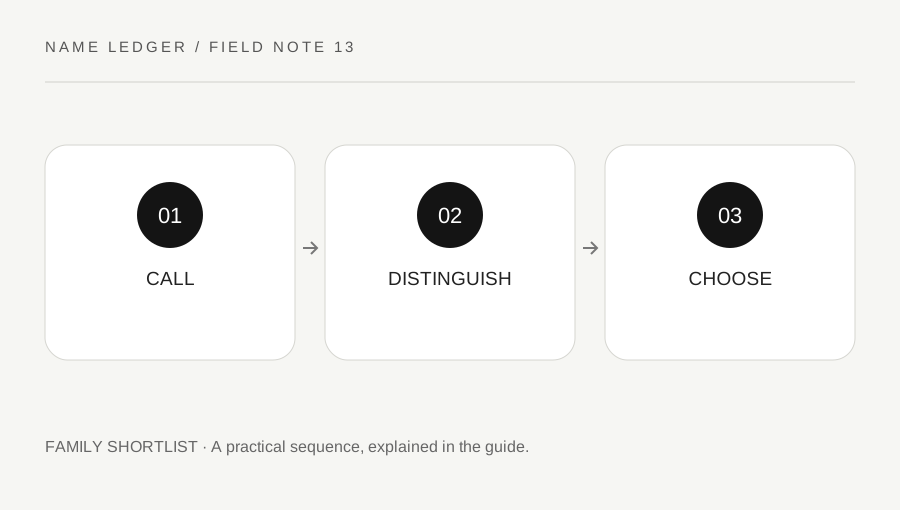
Original explanatory diagram. Numerical examples in this guide illustrate the reasoning; they are not a claim of hands-on testing.
List the names actually used at home
Write the current household forms, including common nicknames, rather than only formal registered names. Add each new candidate in its likely everyday form. This gives a more realistic comparison than matching the first letters on a document. A child may rarely hear a middle name but hear a shortened first name many times a day.
Decide whether a shared initial, theme or rhythm is a genuine priority or simply a pleasant possibility. Existing names do not automatically create a rule for the next choice. If more than one person is deciding, say which parts of the pattern matter to each person. A shortlist becomes easier to discuss when the actual preference is visible rather than hidden inside a matching exercise.
Try a normal-speed calling exercise
Say each name separately at a normal volume, then use ordinary household phrases. Notice whether you repeatedly hear one as another in your own pronunciation. Do not shout or make the test uncomfortable, and do not interpret a single mishearing as a universal problem. The exercise provides a small practical observation from your setting.
Compare initials and written forms as a separate question. Two names can look different while sounding similar, or share an initial while remaining easy to distinguish. If several languages are used at home, try the forms relevant to those conversations. Ask willing family members for their personal observations without expecting one person to represent every accent or language community.
Use a theme-versus-use example
Imagine a family enjoys a shared initial and has three new candidates. Two differ clearly from the existing everyday names, while the third repeatedly blends with a sibling’s nickname in their normal speech. They record that practical concern and compare how strongly they value the exact candidate against the matching pattern.
They do not call the third name objectively unsuitable, because another household may use different pronunciations and nicknames. They also avoid letting a popularity position settle a household sound question. The explorer can show separate recorded-use counts for exact spellings, but it cannot measure how often these particular siblings will misunderstand a call across a room. That comparison belongs to the family’s practical trial.
Preserve individuality in the final explanation
A name can connect to siblings without needing to match every feature. Discuss whether each candidate is liked on its own and whether the family would still consider it without the theme. This helps distinguish a meaningful connection from a constraint that has started to feel compulsory. A candidate can remain strong even if it changes an earlier pattern.
Keep private information about existing children out of public polls or screenshots. Use the final shortlist to discuss exact spelling, intended pronunciation and full-name forms, then proofread the chosen sequence. The aim is an everyday name the decision-makers value, with a clear understanding of any shared theme and enough room for each person to use their own identity over time.
Check nicknames as a second set
Repeat the comparison with the short forms you genuinely expect, not every nickname imaginable. If the new formal candidate is distinct but its planned nickname duplicates an existing household form, that is useful to discuss now. A nickname remains an expectation rather than a guarantee, so leave room for later preference. Write a simple note about the specific overlap and possible alternatives. This is more constructive than rejecting an entire first-letter family of names because one pair happened to sound alike during a single reading.
A practical checklist
Tick items for your own use. This checklist is saved only in this browser.
Questions that come up
Should sibling names share a theme?
Only if the decision-makers value it. Practical distinction and liking each candidate individually can matter as much as a shared pattern.
Can the data measure household confusion?
No. Recorded national counts do not measure how a particular family hears or uses names.
Are matching initials always confusing?
No. Compare the actual sound and everyday forms instead of assuming the initial determines the outcome.
References & scope
Background references checked on 18 October 2026. The examples and practice exercises are original editorial explanations, not copied procedures or professional advice.