Proofread a Final Name: Build One Clear Master Copy
After a long search, a small transcription mistake can still cause confusion. Create one checked spelling and follow the relevant authority’s instructions when completing official documents.
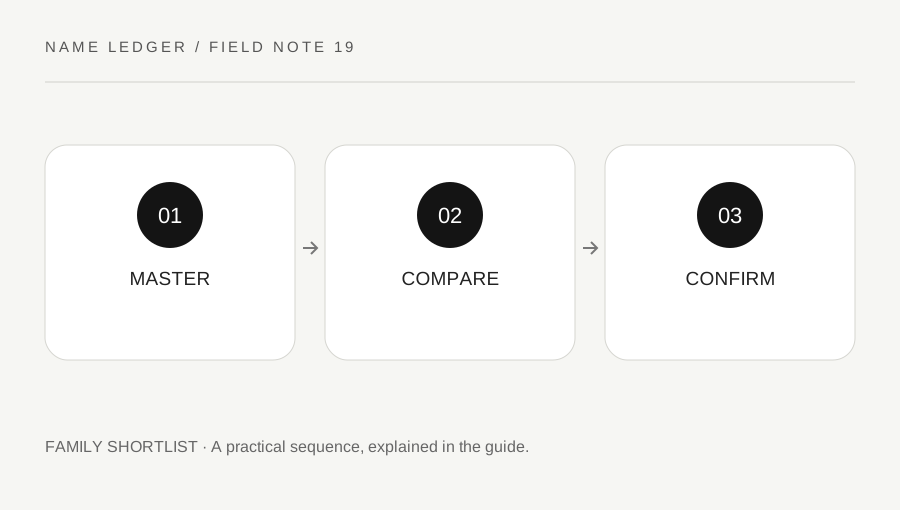
Original explanatory diagram. Numerical examples in this guide illustrate the reasoning; they are not a claim of hands-on testing.
Move alternatives out of the final reference
Make a fresh private note containing only the intended full name, in the intended order. Do not use a shortlist that still shows several variants, provisional nicknames or crossed-out options as the reference for a formal task. Label the note clearly as the family’s selected spelling and keep any unresolved choice separate until it is actually resolved.
Read each component slowly and compare letters rather than relying only on the sound. Check repeated letters, similar-looking sequences and any spacing or punctuation. If more than one decision-maker is involved, ask them to inspect the same written reference rather than approving different screenshots. A spoken agreement can hide a spelling difference that a shared master copy makes visible.
Follow the correct authority and field instructions
Official name-entry requirements depend on the jurisdiction and document. Use the current instructions from the relevant authority, not a general naming website or an assumption based on a source dataset. This journal does not decide legal acceptability, deadlines or the proper way to divide a particular full name across official fields.
If a field label is unclear, ask the responsible office before guessing. A character not displayed in a dataset may be a tabulation issue rather than a legal rule, and a published spelling does not guarantee acceptance by another system. Keep administrative questions separate from family pronunciation preferences. The goal is to provide the intended information accurately through the authorized process.
Use a two-person transcription check when helpful
Imagine one person types the chosen name into an authorized form while another compares it against the private master. They inspect each field, the order and any required punctuation before submission. This example is a proofreading method, not a description of a particular jurisdiction’s procedure. Follow the actual form’s rules even if its layout differs from the master note.
If the form offers a review screen, inspect it carefully. Do not assume browser autofill has inserted the intended candidate rather than an account holder’s name or an earlier test entry. Check only information you are authorized to enter, and avoid using a shared or untrusted device for sensitive registration details. Keep the completed reference secure rather than posting it publicly to ask whether the letters look right.
Confirm the issued or saved result through the proper route
Where a document or confirmation is supplied, compare the name with the master and use the authority’s correction procedure if something differs. Do not improvise a change or assume that editing a local copy corrects the official record. A visual mismatch deserves a direct question to the responsible organization, especially when spacing or multiple name components are involved.
Keep appropriate records according to your needs and the official process, without retaining unnecessary sensitive copies in shared folders. The explorer and its CSV remain research aids, not evidence of registration or identity. A clear final spelling, careful entry and an authorized confirmation route can prevent a long naming discussion from ending with an avoidable transcription problem.
Check the everyday announcement separately
A family announcement may use a nickname, decorative typeface or informal spacing. Proofread it against the master too, while keeping its purpose separate from an official record. Make sure the announcement does not expose more identifying information than you intend. If a stylized font makes letters ambiguous, keep a plain-text version for practical use. The final chosen spelling should remain easy to retrieve even if a decorative image or a temporary social post is later deleted or difficult to read.
A practical checklist
Tick items for your own use. This checklist is saved only in this browser.
Questions that come up
Does a shortlist CSV prove a registered name?
No. It is a research export containing source rows. Official registration and identity documents follow their own authorized procedures.
Can I infer legal character rules from SSA strings?
No. Dataset tabulation and legal registration requirements are different questions. Ask the relevant authority.
What if a form seems to split the name incorrectly?
Consult the responsible office rather than guessing how a particular name should be entered into its fields.
References & scope
Background references checked on 18 October 2026. The examples and practice exercises are original editorial explanations, not copied procedures or professional advice.