Sharing a Name Shortlist: Ask for Useful Input Without Losing Privacy
You can ask for a specific opinion without publishing the entire family decision. Choose the audience, the question and the amount of identifying detail deliberately.
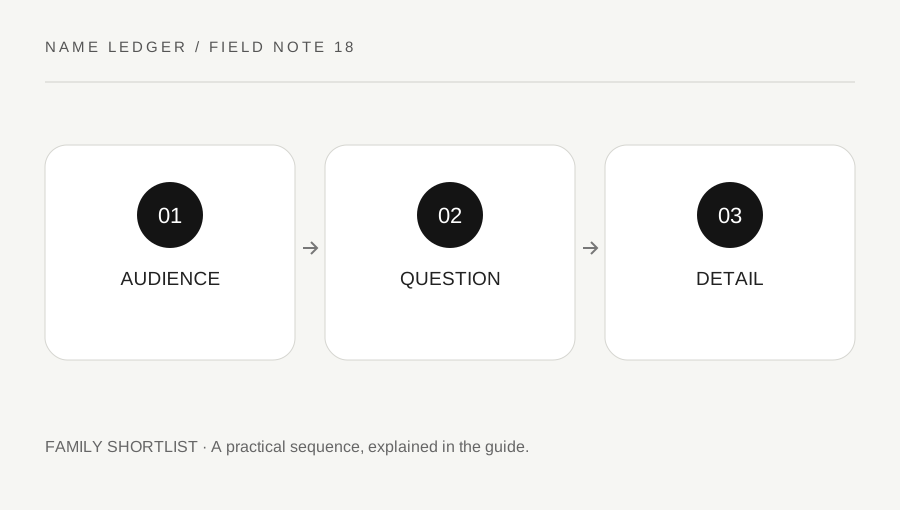
Original explanatory diagram. Numerical examples in this guide illustrate the reasoning; they are not a claim of hands-on testing.
Decide what input you actually need
A request about pronunciation is different from a request about a family connection or a vote on favorites. Write the question before sharing the list. If the decision-makers already agree on a candidate, ask whether outside input would answer anything useful or simply create pressure. A private preference does not require public approval.
Choose people with relevant knowledge who are willing to help. A language-specific question may benefit from a suitable reference or informed speaker, while a household rhythm question may be better tested privately. Do not ask one person to represent an entire community. Clarify that their observation is one piece of input rather than a promise to let the response decide the outcome.
Minimize identifying information
A first-name candidate alone can be less identifying than a full name with surname, expected birth details, location and family story. Share only the pieces needed for the question. If you want feedback on full-name flow, consider whether a trusted private conversation is more appropriate than a public post. Keep existing children’s details and relatives' private histories out of broad discussions.
Before sharing a screenshot or CSV, read every visible field. The explorer’s export includes source counts and categories, but you may add identifying notes outside the tool. Check those additions carefully. Browser-local storage does not control what happens after you download or share a file, and clearing the tool’s shortlist cannot retrieve copies someone else already received.
Use a focused-feedback example
Imagine a family wants to know how a candidate is naturally read in a language they use with relatives. They ask a willing knowledgeable person privately, supply the exact spelling and explain the intended pronunciation. They do not need to disclose an expected birth date, full address or an entire family history to answer that question.
The helper describes their own reading and notes a regional variation they know. The family records the response within that scope and checks a relevant reference if the difference matters. They do not turn it into a claim that everybody in the country will pronounce the name that way. A focused question produces more usable evidence than a large poll asking whether the name is good.
Set expectations about the decision
Tell contributors whether you are gathering information or seeking preferences. If only the decision-makers choose the name, make that boundary clear without inviting an argument about every suggestion. A person can dislike a candidate without revealing an objective defect. Separate a concrete concern that deserves checking from a personal reaction that you can acknowledge and leave as personal.
Keep a short record of useful follow-ups and avoid circulating every negative comment among relatives. Once the choice is final, decide what story and spelling you want to share. You do not need to publish the rejected shortlist or explain private tradeoffs. A respectful process protects both the family’s decision and the people who offered their time.
Manage copies after the conversation
Delete or retain downloaded lists according to your needs, and ask trusted recipients not to forward private material when that matters. Understand that a request cannot guarantee retrieval of every copy already made. If you posted publicly and regret the detail, use the platform’s removal controls and review what remains visible. The practical lesson is to minimize disclosure before sharing, rather than relying on a later clear button. Keep the checked final name reference in a suitable private place for any formal steps.
A practical checklist
Tick items for your own use. This checklist is saved only in this browser.
Questions that come up
Does clearing the local shortlist remove shared copies?
No. It affects this tool’s local list. Downloads, messages, screenshots and recipient copies must be managed separately.
Is a large poll better evidence about pronunciation?
Not necessarily. It may mix languages and contexts without a clear method. A relevant reference and focused informed input can be more useful.
Must I explain every rejected candidate?
No. Share only what is useful and comfortable for the decision-makers and respect private family information.
References & scope
Background references checked on 18 October 2026. The examples and practice exercises are original editorial explanations, not copied procedures or professional advice.