Formal Name and Nickname: Discuss Both Before Choosing
A formal name and an everyday short form can serve different purposes. Compare them deliberately and avoid assuming that everyone will use the nickname you have planned.
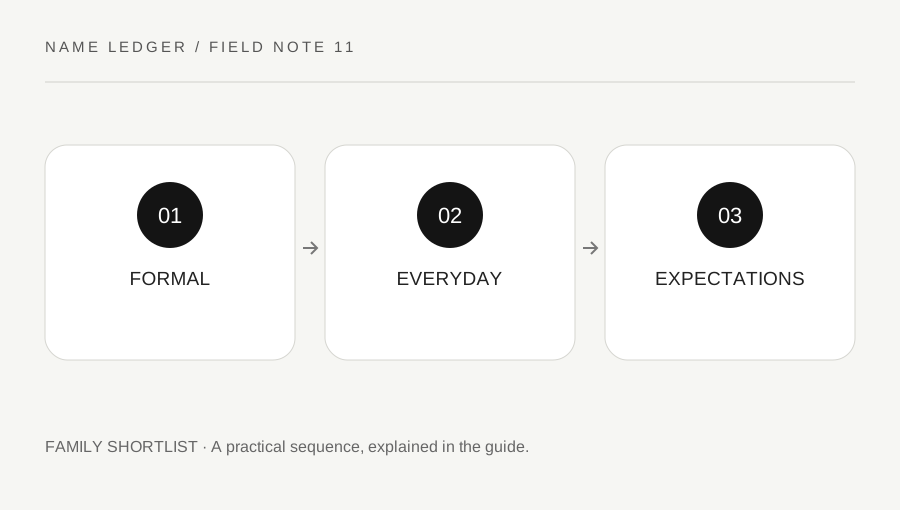
Original explanatory diagram. Numerical examples in this guide illustrate the reasoning; they are not a claim of hands-on testing.
Write the actual forms you mean
List the formal candidate exactly as you would intend to register it, then write any preferred nickname separately. If the short form could stand on its own, include that as a genuine alternative rather than assuming a longer form is always necessary. The decision depends on the family’s values and the relevant registration rules, not a universal rule about completeness.
Check whether every person making the choice likes both forms. Someone may love the formal name but dislike the planned nickname, or the reverse. Say this clearly before popularity data becomes the focus. A count for the formal spelling does not automatically measure the number of people who use that nickname in daily life.
Keep data rows separate from usage assumptions
Search each exact spelling independently if both appear in the published file. The dataset records the name strings under its own definitions; it does not link each person’s registered name to all later informal forms. Adding a formal row and a nickname row does not establish the total number of people called by the nickname.
Avoid creating an official-looking combined popularity position from those selected rows. If you make a private comparison, label it as a grouping you chose and explain its limits. The explorer does not infer nickname relationships because the same short form can be used in different families and contexts. Personal usage needs personal knowledge or an appropriate reference, not an automated guess from spelling.
Try introductions and full-name contexts
Say the formal full name and the everyday full name with the surname. Imagine an ordinary introduction, a written label and a situation where the formal form is read aloud. Notice whether you are comfortable hearing both. If a family connection depends on the full form, discuss whether the expected everyday usage still preserves the meaning that matters to you.
Imagine a family considering a long formal candidate and a short form they both enjoy. They try both with the surname and discover that one person expected the nickname to be optional while the other expected it always. That conversation is more useful before the decision than after it. The example illustrates an expectation to clarify, not a prediction about how a child or community will eventually use a name.
Leave room for the person using the name
You can choose an intended form and introduce it consistently, but you cannot guarantee every later nickname, pronunciation or preference. Avoid treating a planned short form as a permanent contract. A thoughtful decision can acknowledge that the person may later prefer the formal name, the nickname or another appropriate form.
If you strongly dislike the common informal possibilities you already know, consider whether that would make the formal candidate uncomfortable for you. Verify any supposed traditional nickname relationship through a relevant reference rather than assuming an internet list is authoritative. Keep the final spelling clear for official forms and the preferred everyday form clear for introductions, without turning either into a claim about universal usage.
Check the handoff between written and spoken names
A household may use a nickname verbally while an appointment, school or account uses a formal name. Discuss how you would explain that connection simply when needed, while respecting the policies of the relevant organization. Do not assume the explorer can tell you which fields accept a preferred name. Keep private administrative details out of public shortlists. The practical benefit of planning both forms is a clearer family expectation and a checked written reference, not the ability to control every future introduction.
A practical checklist
Tick items for your own use. This checklist is saved only in this browser.
Questions that come up
Does the formal-name count include everyone using its nickname?
No. This dataset does not link registered strings to every informal form used in daily life.
Must a nickname have a longer formal version?
There is no universal rule. Consider family preference and check the relevant registration authority for actual legal requirements.
Can the tool identify traditional nickname relationships?
No. It explores exact published spellings and counts, not verified nickname histories.
References & scope
Background references checked on 18 October 2026. The examples and practice exercises are original editorial explanations, not copied procedures or professional advice.