Find Names Starting with a Letter Without Letting the Filter Choose
An initial can make a large list manageable, but it should be a deliberate preference. Use it to discover candidates and then check what matters beyond the first letter.
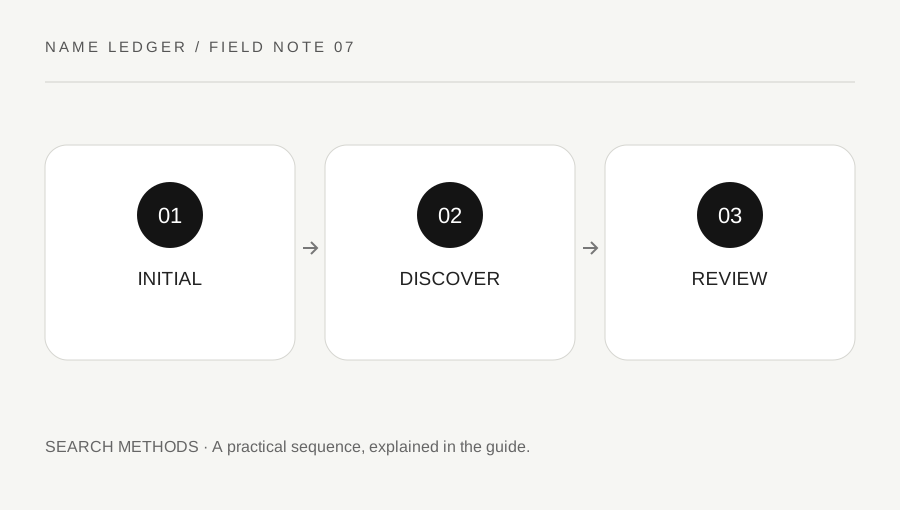
Original explanatory diagram. Numerical examples in this guide illustrate the reasoning; they are not a claim of hands-on testing.
Decide why the initial matters
Write down the reason for choosing a particular first letter. It may connect to a family tradition, a person you want to honor or a set of initials you enjoy. Distinguish a firm requirement from a preference you are willing to relax. This keeps the search from rejecting a strong candidate simply because a temporary filter became an unspoken rule.
If more than one person is choosing, agree whether the initial is shared ground or one person’s suggestion. Do not assume a matching sibling pattern needs to continue forever. A useful starting sentence is that the letter helps the search, while the full name still needs to work in the family’s actual languages and daily use. The explorer cannot decide which personal connection deserves priority.
Use prefix search and read the remaining context
Enter the initial in the name-text field and choose Starts with. Leave other filters broad at first so you can see a range of published spellings. Narrow the written length or source category only when you have a reason. Each result still refers to its exact spelling and the published U.S. 2025 count; being near the top of a filtered list does not create a new official initial-based rank.
Change one filter at a time and notice what disappears. If a favorite is missing, reset the filters and try its exact spelling before drawing conclusions. The file has publication limits, and the tool does not invent entries to complete an alphabet. A result set is an exploration of the published rows rather than a dictionary of every possible name beginning with the chosen letter.
Compare a few genuine candidates
Save several candidates you would actually consider and read each with the surname. Look beyond matching initials to the sound transitions, spelling and intended pronunciation. Names starting with the same letter can still be distinct in everyday speech, while two names with different initials can sound very similar. A visual rule is not a substitute for trying the full sequence aloud.
Imagine a family looking for an M initial. They save four exact spellings, then discover that two blend awkwardly with their surname in their preferred pronunciation. They keep the other two and briefly revisit the filter. This is a useful process example, not a claim that any letter produces a particular rhythm or quality. Personal observations should remain attached to the family’s actual combinations.
Keep an option outside the pattern
If the initial is a preference rather than a requirement, keep one favorite from outside the filter for comparison. Ask what you would lose by relaxing the rule and what you would gain. A pattern can be meaningful without being mandatory. This small check prevents a convenient search method from taking over the entire decision.
Record the final shortlist with exact spellings and separate notes for data, pronunciation and personal connection. Do not label every matching name as culturally related merely because it shares a letter. Origins require name-specific evidence. The useful outcome is a small group of real choices, with a clear reason for the initial and enough flexibility to notice when the family values something else more.
Inspect the whole set of initials
Try the intended first, middle and surname initials together in the formats your family expects to use. Check a monogram separately if that is relevant because its ordering can differ from an ordinary initial sequence. Do not spend hours searching for every remote association: identify issues that would actually matter to you. If an initial combination raises a concern, compare a different middle name or candidate deliberately rather than silently changing the preferred spelling. Keep the full written name as the master reference.
A practical checklist
Tick items for your own use. This checklist is saved only in this browser.
Questions that come up
Does the first result become the top name for that letter?
It is the first row under your chosen filters and sort. Its displayed source-list position remains within the original sex-specific count order.
Can a missing letter result mean no such name exists?
No. Filters and publication limits restrict what appears. This file is not an exhaustive dictionary of possible names.
Should sibling names always share an initial?
That is a family preference. Check everyday distinction and personal meaning rather than assuming the pattern is required.
References & scope
Background references checked on 18 October 2026. The examples and practice exercises are original editorial explanations, not copied procedures or professional advice.