Testing a Full Name: Rhythm, Syllables and the Surname
A full name is spoken and written as a sequence. Try that sequence at normal speed instead of relying on a formula about how many syllables the first and last names should contain.
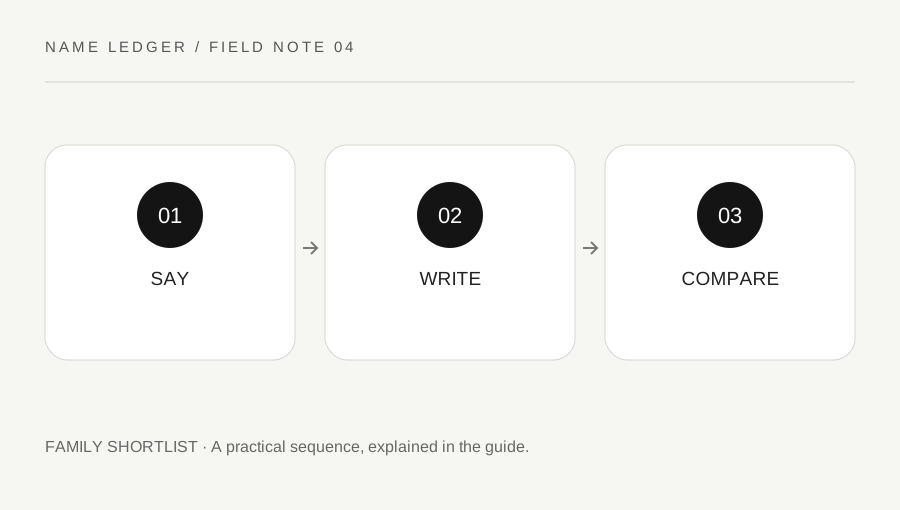
Original explanatory diagram. Numerical examples in this guide illustrate the reasoning; they are not a claim of hands-on testing.
Use the actual full-name combinations
Write each candidate with the surname you expect to use, plus any middle name under consideration. If the surname is still undecided, keep those possibilities visible rather than assuming they sound interchangeable. A given name that you like by itself may have a different rhythm in the complete sequence, but that is an observation to discuss rather than a reason to reject it automatically.
Say each combination slowly once and then at a normal conversational pace. Notice where words join, where you naturally pause and whether a repeated sound makes the sequence difficult for you. Do not turn one person's first reading into a universal judgment. The family and language context matter more than an invented rule that every short surname needs a long first name.
Treat syllable counts as pronunciation-dependent notes
If counting syllables helps you compare candidates, count the pronunciation you intend to use. A spelling alone does not always determine one count across languages and accents. Record any genuine uncertainty rather than letting an automatic estimate decide the matter. The name explorer filters letter length, not syllables, precisely because those are different properties.
Use rhythm as a way to notice preferences. You may enjoy a repeated beat, prefer a clear contrast, or value a family connection strongly enough that rhythm is a minor consideration. There is no score here that ranks names by musical quality. A practical note such as “we blend the last two sounds when speaking quickly” is more useful than claiming that a combination breaks a universal naming formula.
Check the written sequence and initials
Write the full name in ordinary formats: a first-and-last introduction, a form with a middle initial and a name written on a small label. Check the initials if they matter to you, while avoiding an endless search for every possible interpretation. If a family name has spacing, punctuation or more than one component, use the form you actually intend rather than simplifying it for the exercise.
Consider the context in which the name will most often be used. A household nickname can differ from the official given name, and a middle name may be spoken less frequently. Do not assume that every form allows the same characters or length. Before registration or a formal document, check the current instructions of the relevant authority rather than using this practical exercise as legal guidance.
Work through a neutral comparison exercise
Imagine a family comparing three unnamed candidates with a two-part surname. They read each full sequence, then use the short everyday version in a greeting. Candidate one is easy for them to say but shares a strong sound with a sibling's name. Candidate two has a preferred family connection. Candidate three looks appealing in writing but is repeatedly shortened in conversation.
They record these observations beside the separate popularity counts, without combining everything into a numerical winner. The exercise reveals which tradeoffs are real for them. If the family connection matters most, they can choose candidate two deliberately. If day-to-day distinction matters more, they can repeat a household calling exercise. Neither decision is established by a syllable formula or by a national rank.
Repeat later without over-testing
Return to the shortlist on another day and say the strongest combinations again. A small break can separate a passing impression from a preference you keep. Stop when the comparison has answered useful questions; trying every possible sentence can make any name begin to sound unfamiliar. Keep the exercise proportionate to the decision and respectful of other family members' time.
Preserve a brief record of the final spelling, intended pronunciation and chosen full sequence. Use it to proofread any forms you are authorized to complete. A good shortlist process makes room for personal meaning, ordinary use and reliable data without pretending that a name can be optimized like a machine setting. The final choice belongs to the family, with these checks serving as practical preparation.
A practical checklist
Tick items for your own use. This checklist is saved only in this browser.
Questions that come up
Does a name need a particular syllable pattern?
No universal pattern determines a good name. Try the combination in the languages and situations relevant to the family and note your own preferences.
Does letter length equal syllable length?
No. The explorer can filter written character length, but it does not infer a universally correct syllable count.
Should matching sibling initials decide the choice?
They can be a personal preference, but also test everyday distinction and consider whether the pattern matters enough to guide the decision.
References & scope
Background references checked on 18 October 2026. The examples and practice exercises are original editorial explanations, not copied procedures or professional advice.