A Favorite Name Is Missing from the Data: What to Check Next
No result is a result about a search, not proof that a name has never been used. Check the filters, spelling and source scope before describing a candidate as unique.
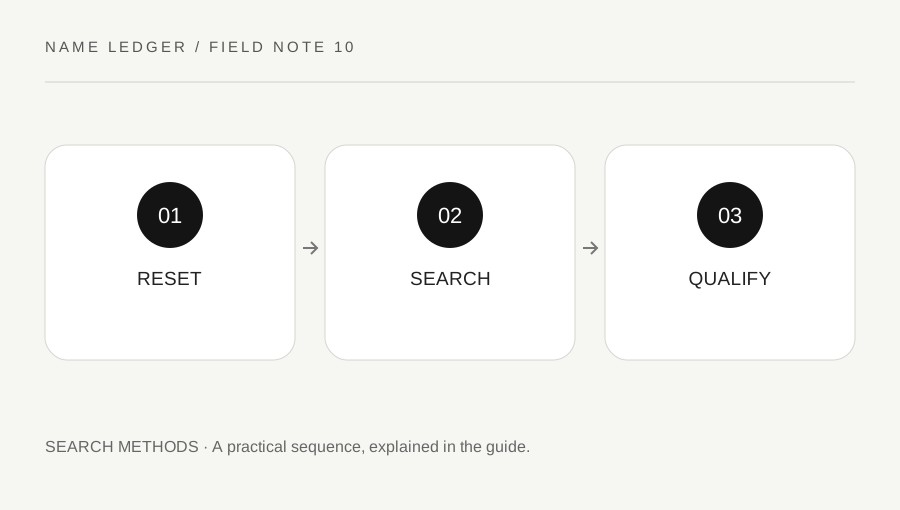
Original explanatory diagram. Numerical examples in this guide illustrate the reasoning; they are not a claim of hands-on testing.
Remove accidental restrictions first
Reset the filters and search the exact spelling with all source categories visible. Check for a trailing space or a different sequence of letters. If you first searched by a narrow written length or maximum position, those controls may have excluded the result. Record the actual search condition rather than relying on a memory of what you think was selected.
Try a short prefix only as a way to inspect nearby recorded spellings, not as a license to treat every similar row as the same name. A result with one changed letter is a different exact string. The explorer does not infer pronunciation or silently combine variants. Keep the family’s preferred spelling clear while investigating why it is absent.
Read the publication boundary
The national file does not publish every tiny count, and its geography and birth year are specific. A missing row can therefore have several explanations. It does not establish zero use worldwide or zero use across all years. The explorer reports published rows only and does not estimate a hidden count to make the interface feel complete.
Read the official background for its treatment of the first-name field, including punctuation and spacing. If your intended form contains features handled differently in the source tabulation, the displayed string may not match your personal presentation exactly. Do not use that discrepancy to declare the family form invalid. Data formatting and current legal registration rules are separate questions.
Use an absence example without inventing a count
Imagine a family searching for a preferred spelling and finding no exact row after resetting the filters. They save a private note saying that the spelling was not found in the published national U.S. 2025 file. They do not assign it a count of zero or claim that their child would be the only person with the name.
If they want historical context, they use the official year tools or another appropriate source and record the new scope. If they want an origin or pronunciation, they consult a reliable name-specific language reference. Each follow-up answers a different question. A search interface cannot turn absence into a complete biography of a spelling, however appealing that story might sound.
Continue the shortlist on practical grounds
A missing candidate can remain a genuine family choice. Discuss the exact writing, intended pronunciation, full-name sequence and personal connection just as you would for a published row. If the source cannot provide a count, leave that field unavailable instead of filling it with an invented rarity score. The lack of a number should not force every other preference out of the conversation.
Before registration, use the relevant authority’s current instructions if there is any question about permitted characters or naming rules. This journal does not decide legal acceptability, and absence from one dataset is not a legal rejection. Keep a carefully checked master spelling for later forms and treat the source boundary as context rather than a verdict.
Use precise wording when sharing the idea
Say that you have not found the spelling in a specified published file, rather than calling it completely unused. If another person offers a similar name or a different language form, record that as a new lead to verify instead of immediate proof of equivalence. This keeps the conversation open without sacrificing accuracy. A family can enjoy a distinctive candidate while acknowledging uncertainty about its wider use, and it can value a familiar candidate without needing a rarity claim at all.
A practical checklist
Tick items for your own use. This checklist is saved only in this browser.
Questions that come up
Does no result mean nobody used the name?
No. Search filters, spelling, publication limits, geography and year all restrict what this tool can show.
Can I save an unpublished custom entry here?
The explorer shortlist contains source rows only. Keep a separate private note for a candidate outside the published file.
Does absence mean a name cannot be registered?
No. Registration rules come from the relevant authority, not from whether a spelling appears in this dataset.
References & scope
Background references checked on 18 October 2026. The examples and practice exercises are original editorial explanations, not copied procedures or professional advice.