How to Read Baby-Name Popularity Without Letting Rank Decide
A popularity list tells you something about recorded use. It does not tell you whether a name fits your family, how every person pronounces it or how common it will feel in your community.
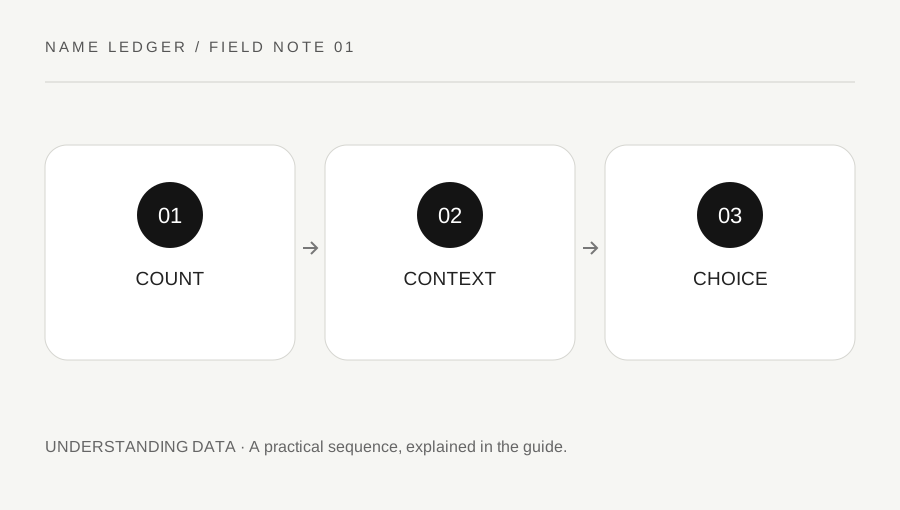
Original explanatory diagram. Numerical examples in this guide illustrate the reasoning; they are not a claim of hands-on testing.
Read the label before comparing numbers
The explorer uses the published national U.S. data for 2025. A row combines an exact recorded spelling, a sex category used in the source, and a count for that year. Read those three pieces together. Searching a familiar spelling and finding a large count is not the same as measuring every person who uses a similar-sounding name across all ages.
The position shown here is the row's place within its sex-specific list, sorted by count with alphabetical ordering for ties. Two names can have equal counts but adjacent displayed positions. That small difference should not be treated as evidence that one was meaningfully more popular. Use the count alongside the position, and keep the year and source in view when you copy a result into your notes.
Separate descriptive information from preference
Decide what you want the popularity information to answer. You might want to know whether a spelling is widely recorded, whether two candidates have similar use, or whether a favorite appears in the published file. These are useful questions. Asking the data to identify the best name for a child is a different request that the file cannot answer.
Write your preferences before browsing a ranking. For example, you might value a family connection, a pronunciation that works in two languages, and an easy distinction from a sibling's name. Popularity can then be one observation beside those preferences. Otherwise, a high or low position can become an accidental decision rule simply because it is the easiest number to compare.
Use an illustrative count comparison
Imagine two hypothetical names with counts of 1,200 and 1,180 in the same year's list. The first has twenty more recorded uses in that category. That difference alone offers little basis for calling one common and the other unusual in everyday life. The examples here are invented for arithmetic, not actual rows in the source file.
Now compare hypothetical counts of 12,000 and 120. That is a much larger difference in the recorded national totals, but it still does not predict a particular classroom. Local communities, language use and chance all affect personal experience. The practical lesson is to read the scale of the counts and avoid turning a position number into a promise about how often a child will meet someone with the name.
Make a comparison you can revisit
Select a few candidates in the explorer and save them to the local shortlist. Compare exact spellings within the same year, and label any notes about pronunciation or family meaning as your own observations. The explorer does not supply a historical trend chart, so a single-year comparison cannot show whether a candidate is rising or falling.
If change over time matters, use the official source's year-by-year tools and keep the years consistent in your separate record. Do not infer a trend from a name appearing near the top of a filtered list. Filtering to one initial or length changes what you can see; it does not create a new national popularity category or alter the underlying published count.
Keep uncertainty visible in the final choice
A name missing from a public file is not proof that nobody used it. Published data has limits, and small counts can be absent. An exact spelling can also differ from the form you searched. Check the source notes and search carefully before describing a name as unique. This journal does not promise uniqueness or estimate the number of future classmates who will share a name.
Use the completed shortlist to discuss how each candidate sounds with the surname, which spelling you prefer and which personal connections matter. Keep the data as context and let the decision include the qualities you cannot reduce to a ranking. A well-considered choice can be popular, uncommon or absent from this particular dataset without needing a numerical justification for the family preference.
A practical checklist
Tick items for your own use. This checklist is saved only in this browser.
Questions that come up
Does a lower position mean a better name?
No. Position describes recorded use in a particular dataset. It does not measure personal suitability, quality, pronunciation or future popularity.
Can this tool show a rising trend?
No. The explorer contains one published year. Use consistent multi-year data from the official source to investigate change over time.
Are tied counts treated specially?
The displayed row positions are sequential within the source categories; equal counts use alphabetical tie order. Read the counts when comparing close positions.
References & scope
Background references checked on 18 October 2026. The examples and practice exercises are original editorial explanations, not copied procedures or professional advice.